on the courtroom as a theatre, and the artists tasked with giving its history a face.
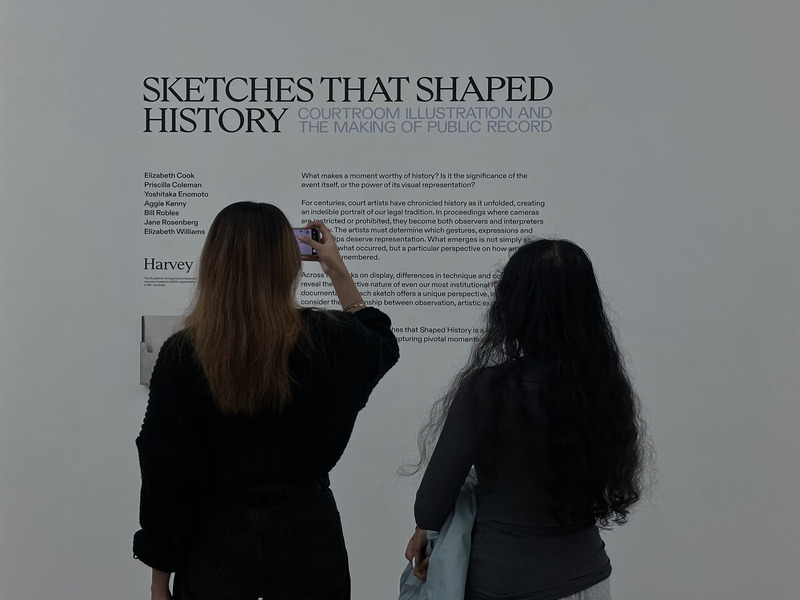
some of the most recognisable images of legal history were drawn by people sitting in the corner of a courtroom. no camera, no opportunity to go back and capture the moment again, just an artist attempting to make sense of an entire room through a pencil and a piece of paper. i’ve been thinking about this since visiting the saatchi gallery’s sketches that shaped history exhibition, and how much of our understanding of certain legal proceedings has been shaped by the person who happened to be holding the sketchbook.
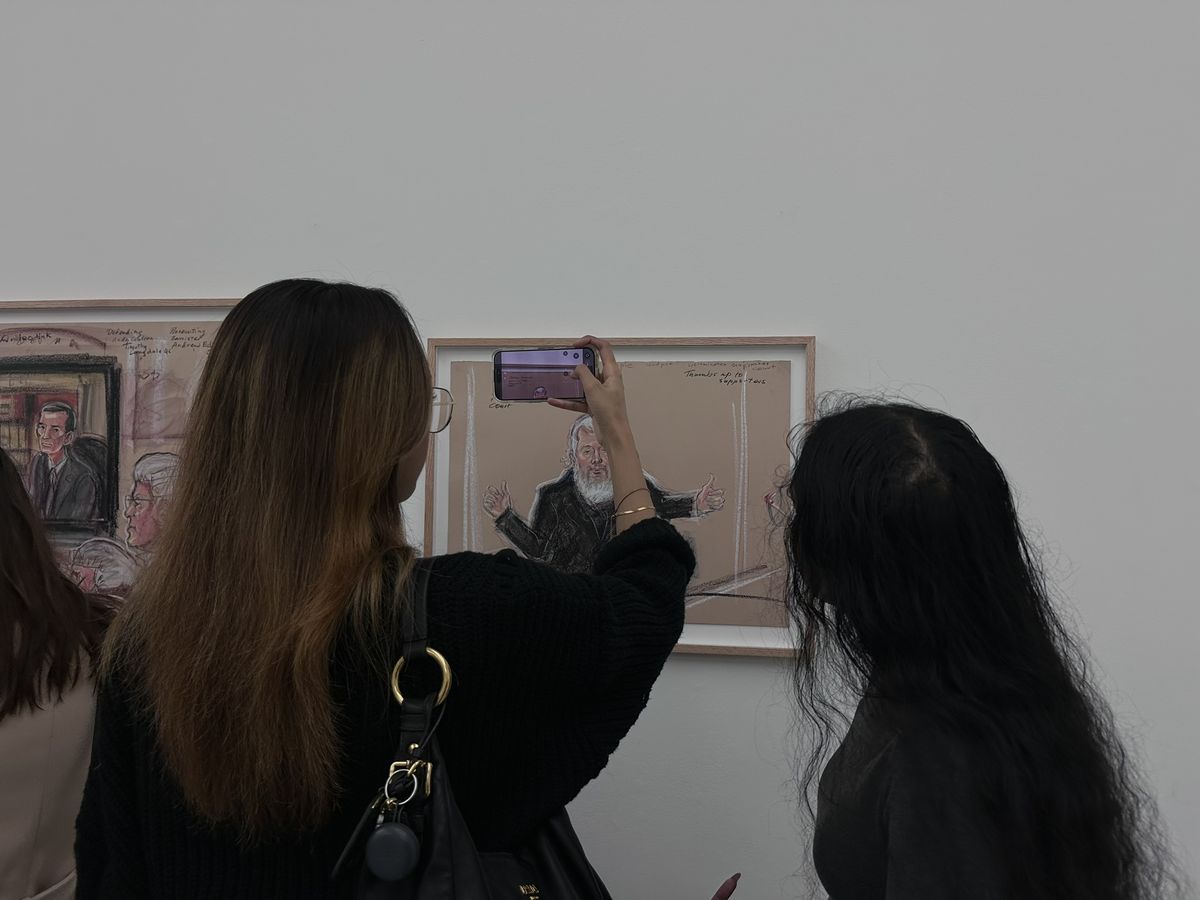
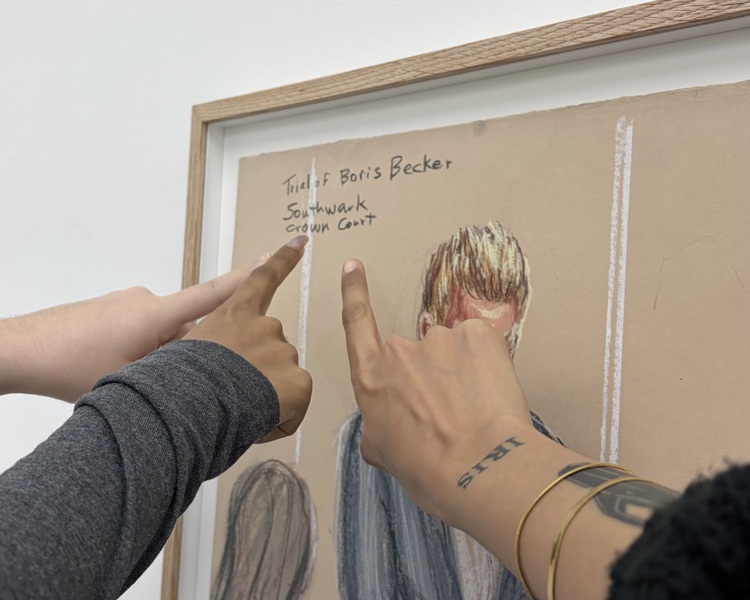
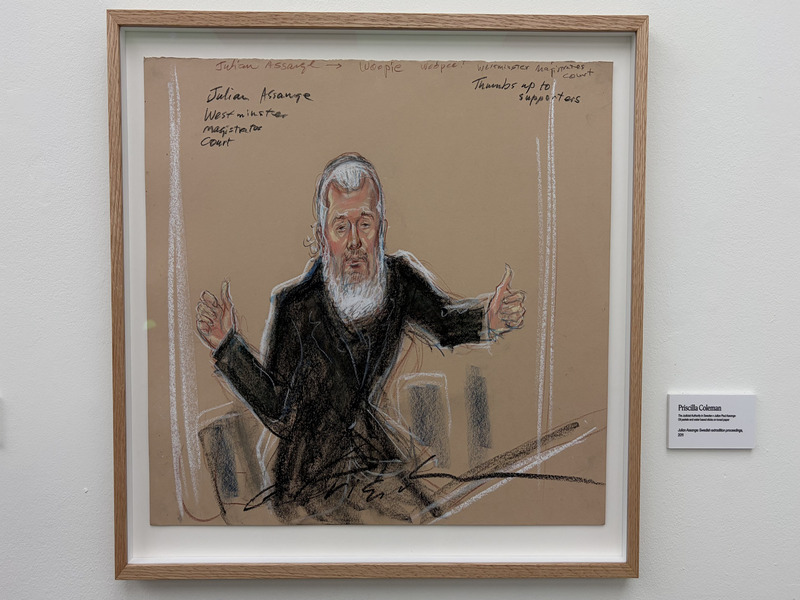 i went along with a couple of friends, and we spent some time looking through illustrations from proceedings that have long since become part of public consciousness. the trials of o. j. simpson, martha stewart and john delorean were amongst those represented, alongside the apple v. samsung patent dispute and general motors’ chapter 11 bankruptcy proceedings. it’s quite an experience to stand in front of an illustration of somebody whose face you’ve probably seen countless times before, knowing that what you’re looking at is somebody else’s interpretation of a moment in their life.
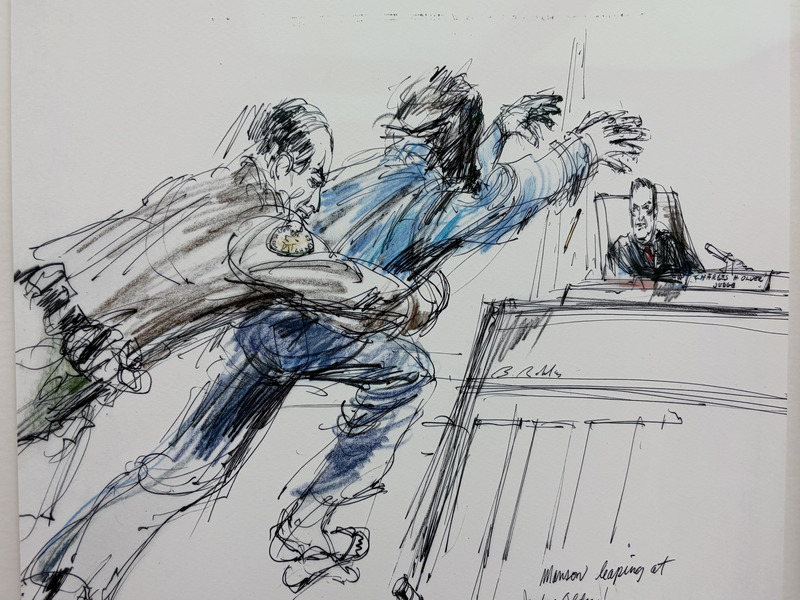
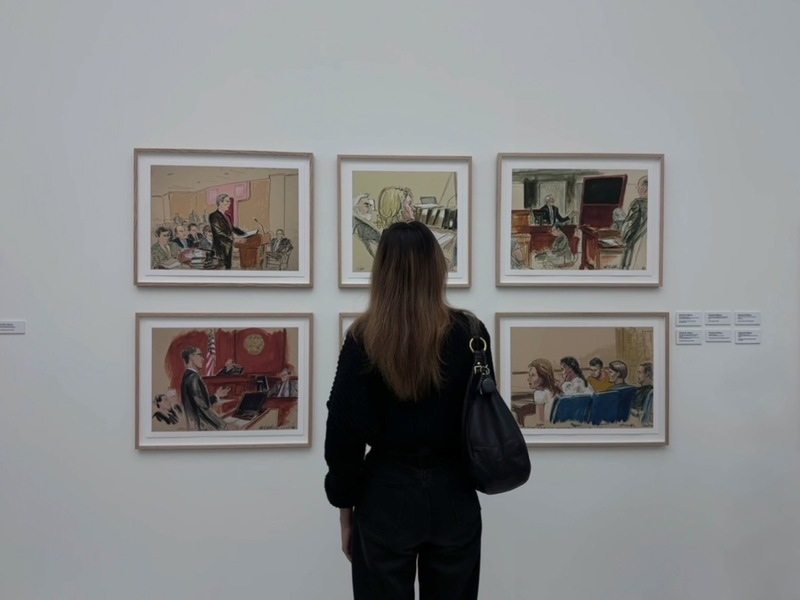 i found myself paying particular attention to the expressions. there’s an almost uncomfortable intimacy to some of the drawings, especially when you consider the circumstances in which they were made. a courtroom artist has to decide where to direct their attention, often whilst proceedings are unfolding around them. a glance across the room, somebody’s posture, the expression on a defendant’s face. all of these things can find their way onto the page, and subsequently become the image through which the public remembers that person. it’s a rather significant responsibility for somebody who, ostensibly, is just there to draw.
 i suppose i’ve always been interested in the way the law constructs its own visual identity. the architecture of a courtroom, the positioning of the judge, the language of legal dress and the almost choreographed movements of everyone involved all contribute to an image of justice that exists well beyond the proceedings themselves. courtroom sketches add another layer to this. where photography is restricted, the artist becomes the public’s eyes, and what they choose to capture can have a life of its own long after the trial has concluded.
there was another aspect of the exhibition that i couldn’t quite stop thinking about. sketches that shaped history is presented by harvey, a legal AI firm. i found the pairing rather amusing, although perhaps unintentionally so. a company working with artificial intelligence in the legal profession is bringing attention to an art form that depends on an individual’s ability to observe, interpret and make something of what they’re witnessing. i wonder whether the relationship between the two was something the organisers intended visitors to consider.
 we’re becoming increasingly comfortable with the idea that artificial intelligence can assist with the more technical aspects of legal work, but i’m less certain about where we draw the line between processing information and understanding it. a courtroom is full of things that won’t necessarily make it into a transcript. the atmosphere, the tension between two people, the expression that appears for a fraction of a second before somebody composes themselves again. i’m not suggesting that an artist has some privileged access to the truth of a proceeding, but their interpretation reminds us that there is always a human being behind the act of recording it.
perhaps that’s what i enjoyed most about the exhibition. the drawings don’t allow us to forget that our understanding of history is rarely as straightforward as we’d like to think. somebody was there, somebody looked at the room and somebody decided what was worth putting on paper. the people in those illustrations have since left the courtroom, and the proceedings themselves have become part of the past. the artist’s interpretation, however, is still here.
and i think there’s something quite wonderful about that. justice might be concerned with establishing what happened, but the images we leave behind have a rather different responsibility. they give history a face.